The Pomeranian is a tiny decorative dog, loved for its cheerful temperament and loyalty to its owner. It resembles a fluffy little teddy bear. The ancestors of the Pomeranian first appeared in Germany, in the province of Pomerania. In aristocratic circles, these adorable fluffy dogs gained popularity thanks to queen Victoria of England. She was the first who brings this charming miniature dog from Florence to England.
Pomeranians are very active and have a cheerful, playful nature. They are deeply loyal to their owners. These dogs are highly intelligent and learn commands quickly. However, their training should not be left unattended. Consistent upbringing is essential, otherwise the dog may try to dominate and show stubbornness. A Pomeranian will become a true friend, bringing its owner a wealth of positive emotions from daily interaction. This breed easily bonds with its owner, adapting to their lifestyle.
Pomeranian coat colors
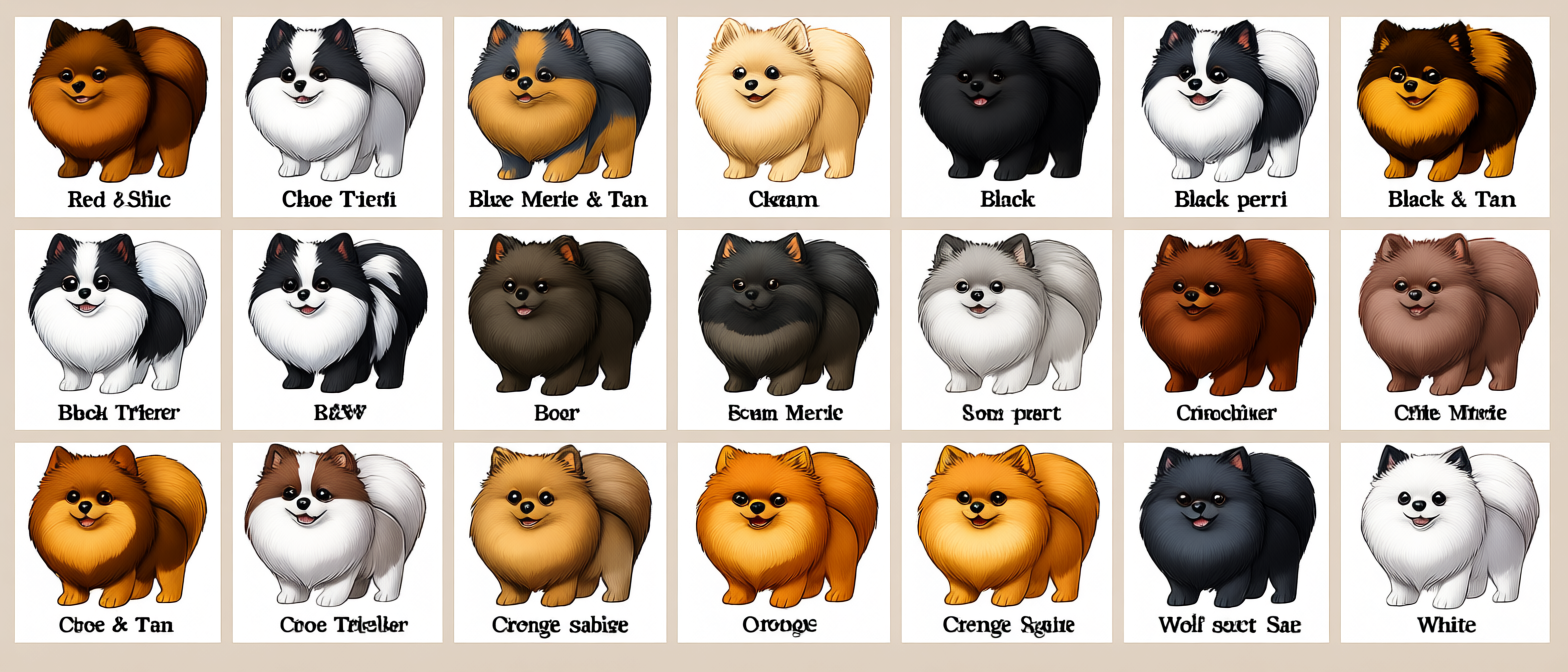
Dwarf spikes come in different colors, such as orange, sable, white, cream, cream-sable, red-sable, black, wolf-gray with marble color, brown, brownish, blue, blue, purple, purple, purple -podpalyy,pati-color, tricolor:
The characteristics of a Pomeranian. The shoulder height is equal to the length of the dog, and the head is wedge-shaped. The ears and nose are small, with a short tail. The chest transitions into a short, strong back through the shoulders. The posture is upright, emphasized by a curled tail position.
The (withers) height of a Pomeranian is on average 21 -24 cm .
The normal weight ranges between 1.5 and 4 kilograms, depending on the size of the dog. Pomeranians generally live between 12 and 16 yers.
Types of Pomeranians:
1. Classic (Fox) Type – has a more elongated muzzle.
2. Bear Type – has a flatter muzzle and a rounder head.
3. Doll Type – has an even flatter muzzle, with eyes set further apart than in the Bear type.
Pomeranian Care Guidelines
Grooming:
Pomeranian puppies require gentle grooming. Their long, fluffy coat is their main treasure, so most care involves careful brushing. Pomeranians shed twice a year. The first shedding occurs around 4–6 months when the puppy coat is replaced by the adult coat.
Bathing:
Wash your Pomeranian 2–3 times a month, as needed, using a shampoo designed for long-haired breeds. Always use conditioner to keep the coat soft and dry thoroughly with a hairdryer. Use a comb with long teeth or a slicker brush. During brushing, the coat should be slightly damp, so keep water softened with conditioner on hand. Shedding periods require more thorough combing.
Trimming:
Thinning scissors are recommended for trimming. Hair is mainly shortened to maintain a neat appearance. For hygiene, trim the area between the paw pads and under the tail. Never use clippers, as they can damage the coat’s natural structure.
Dental Care:
Brush your Pomeranian’s teeth 3–4 times a week using dog toothpaste and a toothbrush or finger attachment. A piece of gauze wrapped around a finger can also work. Including hard food in the diet helps prevent tartar buildup.
Nail Care:
Trim nails using a nail clipper for toy breeds.
Nutrition:
Pomeranians need a balanced diet. High-quality dry food with essential vitamins and minerals is recommended. Natural food is also suitable, but never feed table scraps, including:
• Sweets
• Milk
• Smoked products
• Pastries
• Fatty or spicy food
• Freshwater fish
Food should always be fresh and at room temperature.